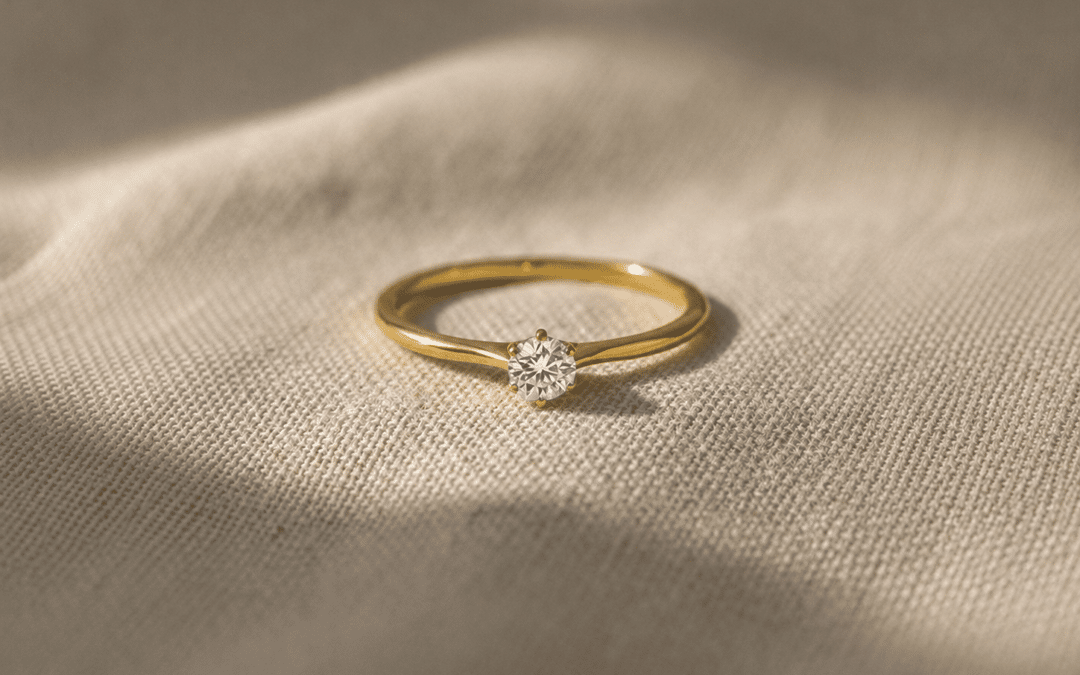
Few decisions generate more discussion during the design of an engagement ring than the choice of centre stone.
Natural diamonds, lab-grown diamonds, and sapphires all have their supporters, and each offers advantages depending on what matters most to the wearer. Not to mention there are a heap of other gemstones to choose from also, these are just the most popular engagement ring gems.
The challenge is that much of the information available online is written by people trying to sell one particular option.
The reality is that there is no universally correct choice.
The best gemstone is the one that aligns with your priorities, budget, values, and long-term expectations.
Understanding the differences is the best place to start.
Natural Diamonds
Natural diamonds formed deep within the earth over billions of years before being brought closer to the surface through volcanic activity.
Their rarity, durability, and long history in engagement jewellery have made them the traditional choice for generations.
Advantages of Natural Diamonds
- Exceptional durability for daily wear
- Timeless appearance
- Wide range of shapes and sizes
- Established market history from time immemorial
- There is a sense of the ‘genuine’ that comes from something produced by the earth.
Many people are drawn to the idea that a natural diamond is a unique geological event that cannot be recreated by nature on demand.
For some, that rarity is part of the appeal.
Considerations
Natural diamonds generally cost more than equivalent lab-grown diamonds.
Two stones that appear almost identical to the eye may have significantly different prices depending on whether they are natural or laboratory grown.
For buyers seeking the largest possible stone for a fixed budget, this can be an important consideration.
Lab-Grown Diamonds
Lab-grown diamonds are real diamonds.
They possess the same crystal structure, chemical composition, hardness, and optical properties as natural diamonds if made in a very specific way.
Even experienced jewellers require specialised equipment to reliably identify the difference.
Advantages of Lab Diamonds
- Man made has a more considerate impact on the environment.
- Larger stone sizes for a given budget
- Identical appearance to natural diamonds
- Excellent durability of course because its diamond
- Wide availability
For buyers whose primary focus is visual appearance and size, lab-grown diamonds can represent excellent value.
A budget that might purchase a smaller natural diamond can often purchase a significantly larger lab-grown diamond.
Considerations
The area where opinions differ most is long-term value retention.
Because lab-grown diamonds can be manufactured continuously, supply is increasing and prices have generally fallen over time.
This differs from the historical behaviour of natural diamonds, which are constrained by mining supply.
For this reason, most people should purchase a lab-grown diamond because they enjoy it, not because they expect it to hold value in the same way some natural diamonds may.
Australian Sapphires
Australian sapphires have become increasingly popular in engagement rings, particularly among clients seeking something more individual than a traditional diamond.
Australia produces some of the world’s most distinctive sapphires, often displaying blues, teals, greens, and parti colours that are difficult to find elsewhere.
Advantages of Australian Sapphires
- Unique colours
- Excellent durability
- Strong Australian provenance
- Individual character
- Lower cost than many equivalent-sized natural diamonds
- Every stone feels distinctive with personality
Many clients choose Australian sapphires specifically because they do not want a ring that looks like everyone else’s.
No two sapphires are exactly alike.
Considerations
Sapphires are chosen for their colour rather than their brilliance.
A sapphire will never display the same level of white light return and sparkle as a well-cut diamond.
For some people this is a disadvantage.
For others, it is precisely why they prefer them.
Which Is Most Durable?
For everyday wear, all three options perform exceptionally well.
Diamond
- Mohs hardness: 10
- Most scratch-resistant gemstone commonly used in jewellery
Sapphire
- Mohs hardness: 9
- Extremely durable
- Suitable for daily wear
In practical terms, both diamonds and sapphires are excellent choices for engagement rings.
Durability should rarely be the deciding factor between these options.
What About Environmental Claims?
This topic often generates strong opinions.
The truth is that environmental claims can be difficult to compare directly.
Natural diamonds require mining.
Lab-grown diamonds require significant energy inputs.
Both industries continue to improve practices and transparency.
Rather than relying on broad marketing claims, it is generally better to investigate the specific suppliers involved and decide which factors are most important to you.
Most clients ultimately choose based on appearance, budget, rarity, and personal preference rather than environmental messaging alone.
Which Option Offers the Best Value?
The answer depends entirely on how you define value.
If You Want Maximum Size for Your Budget
Lab-grown diamonds are difficult to ignore.
They often allow buyers to obtain significantly larger stones without increasing expenditure.
If You Value Natural Rarity
Natural diamonds remain the benchmark.
For many people, their geological origin and rarity are important parts of the story.
If You Want Something Distinctive
Australian sapphires offer colours and personalities that simply cannot be replicated by diamonds.
For many couples, individuality outweighs tradition.
Which Stone Holds Its Value Best?
This question deserves careful consideration.
An engagement ring should primarily be viewed as something to wear and enjoy rather than an investment.
However, people often ask about long-term value.
Generally speaking:
- Natural diamonds have the longest established resale market.
- Australian sapphires vary significantly depending on rarity and quality.
- Lab-grown diamonds have experienced declining prices as production has increased.
This does not make one option better than another.
It simply means buyers should understand what they are purchasing and why.
Which Stone Suits Different Buyers?
A natural diamond may suit someone who values rarity, tradition, and geological history.
A lab-grown diamond may suit someone focused on maximising size and visual impact within a fixed budget.
An Australian sapphire may suit someone seeking individuality, colour, and a connection to Australian materials.
None of these motivations are right or wrong.
They simply reflect different priorities.
So Which Should You Choose?
The best centre stone is not necessarily the most expensive one.
Nor is it the one currently receiving the most attention online.
The right choice is the stone that feels appropriate for the person who will wear it every day.
Some people have always dreamed of a diamond.
Some want the largest stone possible for their budget.
Others fall in love with the colours and character of a sapphire.
The advantage of custom jewellery is that you do not have to fit your preferences around what happens to be available in a display cabinet.
Instead, the ring can be built around the stone that best suits your priorities.
Because ultimately, the success of an engagement ring is not determined by whether the centre stone is natural, laboratory grown, or sapphire.
It is determined by whether the wearer loves it twenty years from now as much as they did on the day they first received it.