One of the biggest reasons people delay speaking with a jeweller is uncertainty.
Many assume they need a finished design, detailed knowledge of diamonds, a clear idea of exactly what they want before they can begin, or bags and bags of cash.
The reality is much simpler.
Most custom engagement rings begin with a conversation and evolve from there.
Whether you have a complete vision or only a handful of ideas saved on your phone, the process is designed to help you arrive at the right solution without needing to become a jewellery expert.
Step 1: The Initial Consultation
The process starts with a discussion about the person who will wear the ring.
This is often more important than the ring itself.
A good jeweller will want to understand:
- Personal style
- Lifestyle and occupation
- Preferred gemstones
- Budget expectations
- Design preferences
- Important dates and timelines
Many clients arrive with photographs, Pinterest boards, screenshots, or examples they have found online.
Others arrive with no ideas at all.
Both approaches are perfectly normal.
The purpose of the consultation is to establish direction, not make every decision immediately.
Step 2: Developing the Design
Once the goals of the project are understood, the design process begins.
This stage may involve:
- Reviewing inspiration images
- Discussing gemstone options
- Exploring setting styles
- Considering different metal colours
- Refining proportions and details
One of the advantages of custom jewellery is that most elements can be tailored to suit the wearer.
Rather than choosing from existing inventory, the ring is developed specifically for the individual.
Often several options are explored before a final direction is chosen.
The goal is not simply to create something attractive.
The goal is to create something that suits the wearer and performs well over decades of use.
Step 3: Stone Sourcing
For many engagement rings, the centre stone becomes the focal point of the design.
Depending on the project, this may involve:
- Natural diamonds
- Lab-grown diamonds
- Sapphires
- Rubies
- Other coloured gemstones
The stone is usually selected before manufacturing begins so the design can be built around its exact dimensions.
This ensures the setting is properly proportioned and allows the finished ring to look balanced and intentional.
For clients using inherited gemstones, this stage may involve assessing existing stones and determining whether they are suitable for reuse.
Step 4: Design Approval
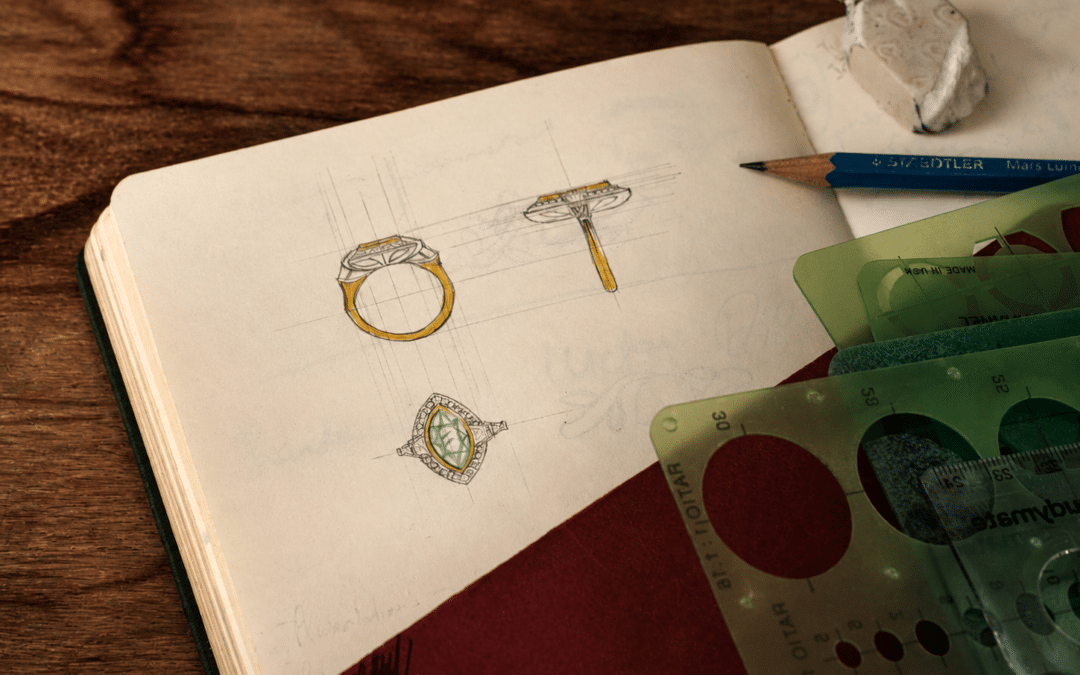
Once the design direction has been established, a drawing is made up to ascertain:
- Overall proportions
- Stone placement
- Band width
- Setting design
- Profile and silhouette
This stage helps eliminate surprises later in the process.
Changes can be discussed and refined before any precious materials are committed.
Step 5: Final Approval
Before manufacturing begins, the design is reviewed one final time.
This approval stage is important because it confirms:
- Stone selection
- Metal choice
- Ring size
- Design details
- Overall appearance
Once approval has been given, a downpayment is given, the project moves into production.
At this point, most major design decisions have already been made.
Step 6: Manufacturing the Ring
This is where the design becomes a physical object.
Depending on the project, manufacturing may involve:
- Hand fabrication
- Stone setting
- Assembly
- Engraving
The exact process varies from project to project.
Some designs require extensive hand work while others rely on a combination of modern technology and traditional bench skills.
The objective remains the same: creating a ring that is both beautiful and durable.
A well-made engagement ring should not simply look impressive on collection day. It should continue to perform reliably through years of everyday wear.
Step 7: Finishing
After setting is complete, the ring undergoes final finishing, which may include:
- Polishing
- Surface finishing
- Quality control checks
- Cleaning
- Final inspection
Every detail is reviewed before the piece is presented to the client.
Step 8: Collection and Delivery
The final stage is often the most exciting.
The finished ring is presented and inspected together.
Care instructions are discussed, sizing is confirmed, and any relevant documentation is provided.
Depending on the project, this may include:
- Valuation documents
- Diamond certificates
- Gemstone reports
- Care recommendations
The ring is now ready for the proposal.
How Long Does the Process Take?
Every project is different, but most custom engagement rings are completed within three to six weeks after the design has been approved.
Factors that can influence timing include:
- Design complexity
- Stone availability
- Manufacturing requirements
- Client approval times
Projects involving rare gemstones or highly detailed custom work may take longer.
For this reason, it is generally advisable to begin the process well before an important proposal date.
Is the Process Difficult?
This is perhaps the biggest misconception surrounding custom jewellery.
Most people assume the process is complicated because the finished piece appears complex.
In reality, the client’s role is quite simple.
You provide ideas, preferences, and feedback.
The jeweller provides guidance, technical knowledge, design expertise, and manufacturing experience.
The process is collaborative, but it is not intended to be difficult.
A good custom jeweller guides each stage, explains the options clearly, and helps narrow down decisions as the project progresses.
The Real Purpose of the Custom Process
The custom engagement ring process is not about creating work for the sake of creating work.
It exists because no two people are the same.
Different lifestyles, different tastes, different budgets, and different stories require different solutions.
The purpose of custom design is to create a ring that feels intentional from the beginning.
Not simply a ring that was available.
But a ring that was made for a specific person, at a specific moment, with a specific purpose.
That is what makes the custom process worthwhile, and why so many people who commission a custom engagement ring would never choose any other approach again.