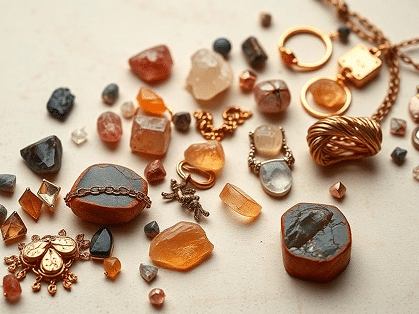
Many people have jewellery sitting in a drawer that they never wear.
Sometimes it belonged to a parent or grandparent. Sometimes it was received as a gift years ago. Sometimes it is simply a piece that no longer suits their taste or lifestyle.
While these pieces may no longer be worn, they are often too valuable, sentimental, or meaningful to discard.
One of the most common questions jewellers receive is:
What should I do with old, inherited, or unworn jewellery?
The answer depends on the condition of the jewellery, its sentimental importance, and what you hope to achieve. In many cases, existing jewellery can become the starting point for something entirely new.
Start by Understanding What You Have
Before making any decisions, it is worth understanding exactly what is in front of you.
Many inherited pieces contain:
- Diamonds
- Sapphires
- Rubies
- Gold
- Platinum
- Antique craftsmanship
- Family history
A professional assessment can help determine:
- Whether gemstones are suitable for reuse
- The condition of settings
- The value of the materials
- Whether restoration is possible
- Whether remodelling is a better option
You may be surprised by what can be preserved and incorporated into a new piece.
Should I Restore It or Remodel It?
This is often the first major decision.
Restoration
Restoration focuses on preserving the original piece.
The goal is to return the jewellery to good condition while maintaining its original character.
This may involve:
- Re-tipping claws
- Replacing worn components
- Repairing settings
- Polishing
- Replacing missing stones
Restoration is often appropriate when the jewellery has historical, sentimental, or design significance.
A beautifully made antique ring may be worth preserving in its original form.
Remodelling
Remodelling involves using some or all of the original materials to create something new.
This option is often chosen when:
- The design feels dated
- The piece is impractical to wear
- The jewellery is damaged beyond economical restoration
- The owner wants something more personal
The sentimental connection remains, but the jewellery becomes relevant to the current generation.
Neither option is inherently better.
The right choice depends on the piece and the person.
Can I Use Existing Diamonds in a New Ring?
In many cases, yes.
Diamonds are among the easiest gemstones to reuse.
A diamond removed from an old ring can often be incorporated into:
- Engagement rings
- Wedding rings
- Pendants
- Earrings
- Cufflinks
- Pins
- Brooches
- Anniversary jewellery
Many clients enjoy knowing that a family diamond continues its story in a new setting.
This approach combines sentiment with practicality.
Rather than leaving the stone unworn, it becomes part of a piece that can be enjoyed every day.
Can Old Gold Be Reused?
This is one of the most misunderstood areas of jewellery remodelling.
Technically, gold can be melted and reused.
However, that does not always mean it should be.
Modern jewellery manufacturing requires predictable metal alloys and known material properties.
For this reason, many jewellers prefer to credit the value of existing gold against a new project rather than directly incorporating old metal into the finished piece.
In some situations, however, reusing the original gold can be appropriate.
The best approach depends on:
- The alloy
- The condition of the metal
- The design being created
- Manufacturing requirements
A discussion with the workshop will help determine the most suitable option.
What If the Jewellery Is Damaged?
Damage does not necessarily mean the piece has reached the end of its life.
Common issues include:
- Worn claws
- Thin ring shanks
- Missing stones
- Bent settings
- Broken chains
Many of these problems can be repaired.
In other cases, the gemstones and precious metals may still be valuable components for a future design.
Often the materials survive long after the original structure has worn out.
Sentimental Value Matters
When discussing inherited jewellery, financial value is only part of the conversation.
Many pieces carry memories of:
- Parents
- Grandparents
- Weddings
- Anniversaries
- Family or professional milestones\
- Commemorations or awards
These emotional connections are often far more important than the materials themselves.
A skilled jeweller understands that remodelling is not simply a manufacturing exercise.
It is often a process of preserving family history while creating something that can continue to be worn.
The goal is not to erase the story.
The goal is to allow the story to continue.
Creating Future Heirlooms
One of the most rewarding aspects of jewellery remodelling is the opportunity to connect generations.
A diamond that belonged to a grandmother may become an engagement ring.
A wedding ring may be transformed into a pendant.
Several family pieces may be combined into a single design.
The result is often more meaningful than either a purely antique piece or an entirely new purchase.
The history remains present, but the jewellery becomes wearable again.
Don’t Forget Insurance and Valuations
Inherited jewellery is frequently undervalued, incorrectly valued, or not valued at all.
Before undertaking significant restoration or remodelling work, it is often sensible to obtain:
- A current valuation
- Identification of important gemstones
- Documentation for insurance purposes
- Photographs and records
If a piece is remodelled, a new valuation will usually be required once the work is complete.
This ensures insurance records remain accurate.
Given the significant increase in precious metal and gemstone prices over recent years, many older valuations no longer reflect replacement costs.
What Is the Best Option?
There is no single answer.
Some pieces deserve restoration.
Some deserve remodelling.
Some are best left untouched and preserved exactly as they are.
The best outcome usually comes from understanding both the practical and sentimental value of the jewellery before making a decision.
For many families, jewellery is one of the few physical objects passed from generation to generation.
It carries stories, memories, and connections that extend far beyond its material value.
Whether the piece is restored, remodelled, or incorporated into an entirely new design, the objective should be the same:
To create something that will be worn, appreciated, and cared for rather than forgotten in a drawer.
Because jewellery that continues to be worn continues to be part of the family’s story.
And that is ultimately what makes an heirloom valuable.